
Fuelled by rising disposable incomes and growing awareness about disciplined investing, monthly SIP inflows across the mutual fund industry could scale up to Rs 40,000 crore over the next 18-?24 months, according to Madhu Nair, CEO of Union Asset Management Company (AMC). SIP inflows stood at Rs 25,925 crore in March, although the industry has witnessed a declining trend over the past four months amid heightened market volatility triggered by frequent US tariff changes.

Quarterly earnings from corporates, the US Fed interest rate decision and other global trends will be the major driving factors for determining movement in the domestic equity market in a holiday-shortened week ahead, analysts said. Besides, factors like trading activity of foreign investors, global oil benchmark Brent crude and rupee-dollar trend would also influence trading.

Among Sensex firms, Kotak Mahindra Bank, Larsen & Toubro, Mahindra & Mahindra, Maruti, Bharti Airtel and Tata Steel were the major gainers. However, Asian Paints and Bajaj Finance were the laggards.

Among Sensex firms, Trent, Power Grid, Tata Motors, Tata Consultancy Services, Asian Paints, NTPC, Adani Ports and Bajaj Finance were the laggards. However, Bharat Electronics, Axis Bank and Bharti Airtel were the major gainers.

The buyback comes at a time when Infosys shares have declined 19 per cent so far this year.

Equity investors will track the trading activity of foreign investors, global trends and ongoing earnings results for further cues, and benchmark indices may continue to witness consolidation in a holiday-shortened week amid the monthly derivatives expiry, analysts said. Markets fell sharply last week amid massive foreign capital outflows and dismal Q2 earnings so far. Weakness in the markets might continue in the near term amid cautiousness among investors ahead of the US presidential election early next month, an expert said.

A strong influx of 11 equity new fund offers (NFOs) in June, particularly within the thematic space, helped mutual funds collect Rs 14,370 crore - the highest ever via such introductory offers. This surpassed the previous high recorded in July 2021, where four NFOs accumulated Rs 13,709 crore, with ICICI Prudential MF's flexicap NFO alone mobilising Rs 9,808 crore.

Foreign investors pulled out Rs 4,285 crore from Indian equities in the first three trading days of the month driven by apprehensions ahead of the third-quarter earnings season and high valuations of domestic stocks. This came following an investment of Rs 15,446 crore in the entire December, data with the depositories showed.

Among Sensex firms, HCL Tech, ICICI Bank, Titan, Trent, Kotak Mahindra Bank, Hindustan Unilever, Mahindra & Mahindra and HDFC Bank were the major laggards. However, Adani Ports, Bharti Airtel, SBI, NTPC and Sun Pharma were among the gainers.

Sri Lanka stays with you not just in memory, but gently reminds you what a society can achieve when heart and heritage guide the way.

India's largest IT services firm Tata Consultancy Services (TCS) on Thursday reported a 1.39 per cent increase in consolidated net profit to Rs 12,075 crore in the July-September quarter of this financial year.

All the BSE sectoral indices closed in the green. BSE Realty, Auto, Capital Goods and Industrials were lead gainers, jumping up to 5 per cent. IndusInd Bank was the lead gainer among Sensex shares, surging by 6.84 per cent. Tata Motors rallied 4.50 per cent. Larsen & Toubro, Axis Bank, Adani Ports, HDFC Bank, ICICI Bank and HCL Tech were also among the gainers. ITC and Hindustan Unilever were the only laggards.

The rupee is undervalued as compared to its peers, shows the latest data from the Reserve Bank of India (RBI), even as the local currency keeps hitting new lows.

Mutual fund assets surged 23 per cent or over Rs 12 lakh crore year-on-year to reach a record of Rs 65.74 lakh crore in FY25, propelled by robust net inflows and mark-to-market gains amid buoyant equity and debt markets.

Dalal Street investors were a poorer lot on Monday as their wealth eroded sharply by Rs 14 lakh crore following a sharp decline in benchmark indices amid a global market meltdown due to recession fears. The 30-share BSE Sensex tumbled 2,226.79 points or 2.95 per cent to settle at 73,137.90. Intra-day, the benchmark slumped 3,939.68 points or 5.22 per cent to 71,425.01.
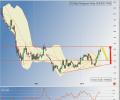
The fall in equity values following the spike in interest rates was sharp but very shallow; stopping just at the 50 DMA for most markets even after the first 5-wave leg down was complete. That shows markets could have another leg up that could make new highs, says Sonali Ranade

Saurav Ghosh's step-by-step guide will help you understand what bonds are, how they help investors make money, how much money they make and which bonds to invest in.
Stock markets would be driven by global trends and foreign investors' trading activity in the holiday-shortened week, analysts said adding that key equity indices may face volatile trends amid the monthly derivatives expiry on Thursday. This week markets will have just three trading sessions. Equity markets will remain closed on Monday for Holi and on Friday for Good Friday. "This week will be shorter due to market closure on both Monday for Holi and Friday for Good Friday.

Investors can meet cash needs without selling their securities.

The implication of April 2 reciprocal tariffs on global trade, trends in overseas markets and trading activity of foreign investors would dictate equity investors' sentiment in a holiday-shortened week ahead, according to analysts. Stock markets would remain closed on Monday for Eid-Ul-Fitr.

618 companies were part of the billion dollar club when the markets reached all-time highs on September 26, 2024. That number has fallen to 500 following a $1 trillion wipeout in India's market capitalisation amid relentless selling by FPIs.

'This is also a time when you realise that short-term trading and dabbling in derivatives may result in financial losses.'

Among Sensex firms, Mahindra & Mahindra climbed 2.34 per cent, followed by Maruti which climbed 1.70 per cent. Power Grid, Reliance Industries, Bharti Airtel and Eternal also were also among the gainers. However, ITC, HCL Tech, Tata Consultancy Services, Tech Mahindra and Infosys were among the laggards.
Bajaj Finance, IndusInd Bank, State Bank of India, Maruti, Tata Motors, ITC, Tata Steel and Reliance Industries were also among the gainers. Nestle, NTPC, Kotak Mahindra Bank, Power Grid and Titan were among the laggards.

The US Federal Reserve's interest rate decision is the biggest event that would drive sentiments in the domestic stock market this week, besides a host of macroeconomic data from the global front and trading activity of foreign investors, analysts said. The Indian equity market had an exceptional last week, with both the Nifty and Sensex hitting their all-time high levels on Thursday.

Digital payments provider PhonePe has filed draft papers with markets regulator Sebi for its upcoming initial public offering (IPO) using the confidential pre-filing route. On Wednesday, the company's spokesperson said, "PhonePe Ltd has filed the Pre-filed Draft Red Herring Prospectus with Sebi and the stock exchanges, under...the Sebi ICDR Regulations in relation to the proposed initial public offering of its equity shares on the main board of the stock exchanges".

The value of foreign portfolio investors' (FPI) holdings in the domestic equities reached $584 billion at the end of December 2022, which was 11 per cent lower from preceding year, according to a Morningstar report. This was largely on low return given by the Indian equities and exodus of foreign money from the domestic stock market. Going by the report, the value of FPIs investments in Indian equities dropped to $584 billion as of December 2022 as compared to $654 billion at the end of December 2021.

Among major Sensex gainers Bajaj Finserv rose the most by 1.42 per cent, Axis Bank gained 0.80 per cent, Infosys by 0.72 per cent, Mahindra & Mahindra by 0.60 per cent, Tata Motors by 0.55 per cent, Bajaj Finance by 0.53 per cent and Tata Steel by 0.52 per cent. Kotak Mahindra Bank, ICICI Bank, HCL Technologies, Bharti Airtel, Maruti Suzuki India, Trent Ltd and Tata Consultancy Services were the losers.

From the Sensex firms, Mahindra & Mahindra, HCL Tech, Tata Motors, Nestle, ITC, Hindustan Unilever, Larsen & Toubro, and Tech Mahindra were the biggest gainers. In contrast, Eternal, UltraTech Cement, Power Grid, Tata Steel and Kotak Mahindra Bank were among the laggards. Eternal dropped 4.51 per cent.
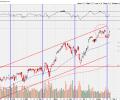
The dollar's preliminary moves after the low 80.90 are supportive of a like dollar rally back to 85.50. We should see confirmation of that in the early part of next week, says Sonali Ranade

'A staggered investment approach (using SIP or STP) can help investors benefit from this opportunity while reducing timing risk.'

Markets regulator Sebi's new guidelines on research analysts (RAs) are forcing several equity research firms publicly announcing plans to shut down their shops due to heightened compliance and operational requirements. The Securities and Exchange Board of India (Sebi), on January 8, came out with guidelines for Research Analysts in a bid to curb fraudulent stock recommendations and illegal practices in the securities market.
 © 2026 Rediff.com - Advertise with us - Disclaimer - Privacy Policy - Sitemap - Feedback - About us - Terms of use - Grievances